

Business communication and general communication share common principles, but they differ in their contexts, purposes, and often in their formalities. This analysis give a breakdown of the distinctions between business communication and general communication:
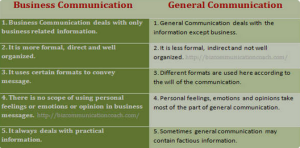
Business Communication and General Communication
Table of Contents
ToggleBusiness Communication:
- Context:
- Business Communication: Occurs within a professional or organizational context. It is specifically tailored for use in the workplace, whether within a company, between organizations, or with external stakeholders.
- Characteristics: Focuses on achieving organizational goals, conveying business-related information, and maintaining professional relationships.
- Purpose:
- Business Communication: Primarily aims to achieve business objectives. This can include conveying information about products or services, coordinating work within teams, making decisions, negotiating deals, and maintaining relationships with clients or partners.
- Characteristics: Often structured, formal, and follows established business etiquette. The primary goal is efficiency and effectiveness in achieving business outcomes.
- Formality:
- Business Communication: Tends to be more formal, structured, and governed by professional norms. Tone and language may be adjusted based on the formality required by the situation.
- Characteristics: Includes official documents, reports, business letters, emails, and formal presentations.
- Audience:
- Business Communication: Directed toward colleagues, employees, managers, clients, partners, investors, and other stakeholders within the business environment.
- Characteristics: Tailored to the needs and expectations of the professional audience. Can be internal (within the organization) or external (with outside entities).
- Channels:
- Business Communication: Utilizes various channels such as email, formal letters, reports, meetings, presentations, and collaborative tools within a business context.
- Characteristics: Often involves specialized tools and platforms for project management, document sharing, and team collaboration.
- Professionalism:
- Business Communication: Requires a high level of professionalism. Messages should be clear, concise, and aligned with organizational goals. Communication reflects the company’s brand and image.
- Characteristics: Adheres to professional standards, corporate identity, and industry-specific norms.
General Communication:
- Context:
- General Communication: Encompasses communication in various contexts of daily life, including personal interactions, social gatherings, and casual conversations.
- Characteristics: Covers a wide range of topics, not necessarily tied to professional or business-related matters.
- Purpose:
- General Communication: Aims to exchange information, express emotions, build relationships, and share thoughts on a variety of subjects.
- Characteristics: May not have a specific goal other than facilitating social interactions, sharing personal experiences, or expressing ideas.
- Formality:
- General Communication: Can be formal or informal depending on the context. Conversations with friends or family may be more informal, while communication in certain social or public settings may require a more formal approach.
- Characteristics: Language and tone are adaptable to the nature of the relationship and the context.
- Audience:
- General Communication: Involves interactions with a broad audience, including family, friends, acquaintances, and the general public.
- Characteristics: Audience may not be as defined or specialized as in business communication. Conversations can be with individuals from various backgrounds and interests.
- Channels:
- General Communication: Utilizes various channels, including face-to-face conversations, phone calls, text messages, social media, and informal written communication.
- Characteristics: Relies on everyday communication tools and platforms used in personal life.
- Professionalism:
- General Communication: While there is an expectation of courtesy and respect, the level of formality and adherence to professional standards may be more relaxed compared to business communication.
- Characteristics: Reflects personal style, cultural norms, and the nature of the relationship.
In summary, while both business communication and general communication involve the exchange of information, they differ in their specific contexts, purposes, levels of formality, and the audiences they address. Business communication is tailored to achieve specific business goals and maintain professional relationships, while general communication is more diverse and adaptable to various social and personal contexts.

